

 Blodgett
CTBR
Half Size Economy Electric Convection OvensBlodgett CTBR Electric Convection Oven
The Blodgett CTBR is a half-size electric convection oven with capacity for five 13" x 18" pans. It features a right-opening door, two-speed fan, solid-state controls and a 200°F–500°F temperature range.
- Voltage
- 208V
- Phase
- 3
- Amps
- 24/12/15 A
- Wattage
- 5.6 kW
Blodgett CTBR
191 compatible parts available
Genuine OEM Parts
Sourced from the manufacturer
Canadian Owned
Based in British Columbia
Canada-Wide Shipping
Every province and territory
24hr Quote Response
Answered by a real technician
Manuals & Documents
About the Blodgett CTBR
Overview
The Blodgett CTBR is a half-size electric convection oven for commercial kitchens. It is offered as a single or double oven, with each oven section accommodating five standard 13" x 18" half-size baking pans. The CTBR shares the CTB family’s main specifications but has a right-opening door and controls on the left. Its half-size format can suit kitchens that need convection baking or roasting capacity while working with a smaller pan format than a full-size bun-pan oven.
Construction and operating details below are drawn from the CTB/CTBR family specification sheet, the product information for CTBR models and the CTB/CTBR installation and operation manual. Electrical configuration, control options and output should be confirmed for the specific unit being purchased.
Key Features
- Half-size pan capacity: Each oven section accepts five 13" x 18" pans, loaded front-to-back.
- Rack configuration: Five removable chrome-plated racks fit into nine rack positions, with a minimum spacing of 1-5/8 inches.
- Convection airflow: A two-speed, 1/4 HP blower motor circulates air in the baking chamber. The motor has automatic thermal overload protection.
- Temperature and timer controls: Standard solid-state manual controls use separate thermostat and timer dials. The thermostat range is 200°F to 500°F, and the timer is 60 minutes.
- Chamber and exterior: The baking compartment has a double-sided porcelainized liner. The exterior is stainless steel on the front, top, sides and back.
- Door and controls arrangement: The CTBR door opens on the right, with the control panel on the left. The dual-pane thermal-glass window is set in a stainless-steel door frame.
Specifications
- Product type: Half-size electric convection oven; single- or double-compartment configurations.
- Pan capacity: Five 13" x 18" pans per oven section.
- Floor-space dimensions: 30-1/4 inches wide x 25-1/8 inches deep.
- Interior dimensions: 15-1/4 inches wide x 20 inches high x 21 inches deep.
- Rack system: Five chrome-plated racks; nine positions; minimum rack spacing of 1-5/8 inches.
- Interior construction: Double-sided porcelainized baking-compartment liner, 14 gauge.
- Exterior construction: Stainless-steel front, top, sides and back; full angle-iron frame; dual-pane thermal-glass window in a stainless-steel door frame; single chrome-plated handle; tilt-down modular front control panel.
- Insulation: Solid mineral-fibre insulation at the top, back, sides and bottom.
- Heating: Two tubular heaters; standard maximum input is 5.6 kW per single oven section. The specification sheet lists an 8 kW increased-output option. Double-oven maximum input is 11.2 kW, with a 16 kW increased-output option.
- Fan: Two-speed blower motor, 1/4 HP, with automatic thermal overload protection. The specification sheet lists 1140 and 1725 RPM at 60 Hz, and 950 and 1425 RPM at 50 Hz.
- Other cooling component: One control-area cooling fan.
- Temperature range: 200°F to 500°F.
- Controls: Standard solid-state manual thermostat and timer with separate dials; 60-minute timer.
- Standard 60 Hz electrical ratings, 5.6 kW: 208 V, single-phase, 27/0/27 A; 208 V, three-phase, 24/12/15 A; 220–240 V, single-phase, 24/0/24 A; or 220–240 V, three-phase, 21/11/14 A.
- Increased-output 60 Hz electrical ratings, 8 kW: 208 V, single-phase, 35/0/35 A; 208 V, three-phase, 22/20/21 A; 220–240 V, single-phase, 32/0/32 A; or 220–240 V, three-phase, 20/18/19 A. The amp values are listed by line in the specification sheet.
- Export electrical ratings at 50 Hz: 220–240 V single-phase, 5.6 kW at 24/0/24 A or 8 kW at 35/0/35 A; 220/380 V three-phase WYE, 5.6 kW at 10/8/8 A or 8 kW at 14/12/12 A; 240/415 V three-phase WYE, 5.6 kW at 10/7/7 A or 8 kW at 13/11/11 A; 230/400 V three-phase WYE, 5.6 kW at 9/8/8 A or 8 kW at 13/11/11 A.
- Approximate shipping weights: Single oven, 260 lb crated and 225 lb uncrated; double oven, 520 lb crated and 450 lb uncrated.
- Minimum entry clearance listed on the specification sheet: 25-1/16 inches uncrated; 30-1/4 inches crated.
Optional controls listed for the CTB/CTBR family include Pulse Plus, Cook & Hold, solid-state digital controls with Cook & Hold and Pulse Plus, and Blodgett IQ. Other listed options and accessories include 4-inch black legs, 6-inch casters, stainless-steel stands in several heights, a stainless-steel vent riser, a cord set with receptacle, 7.5 kW elements, extra oven racks and a stainless-steel oven liner. The specification sheet also lists a solid stainless-steel door and right-hand hinged door as no-charge door options.
Installation & Requirements
The CTB/CTBR manual calls for the oven’s rating plate to be checked against the electrical service available before utility connections are made. The rating plate is located on the underside of the upper ledge above the control panel. The oven is supplied for selected voltage options on grounded single- or three-phase circuits. The supply conduit enters at the rear and connects to the electrical block in the control compartment. Wiring diagrams are located in that compartment. The electrical configuration must match the particular oven; the ratings above are not interchangeable.
For CTBR models, the manual lists 0-inch clearance at the oven body’s right side and back. The specification sheet also states 0-inch product clearance from combustible and non-combustible construction. These stated clearances do not remove the need for adequate airflow: the manual says ventilation must not be obstructed and the oven must have an adequate air supply. Insufficient ventilation can raise control-side ambient temperature and trip the blower motor’s thermal overload protection; the condition must be corrected promptly to avoid permanent oven damage. The manual also advises keeping the area clear of combustibles such as paper, cardboard, flammable liquids and solvents, and not placing strong heat sources such as open-flame ranges, griddles or charbroilers near the oven. A heat shield is recommended by the manufacturer if such a heat source is present.
The manual says the installation area must remain accessible for service. Initial installation checks and adjustments—including thermostat calibration, door adjustment, levelling and tightening fasteners—are the responsibility of the installer or dealer and are not treated as defects covered by the original equipment warranty. It recommends inspection and adjustment by qualified personnel. If the oven is moved, the manual instructs operators to disconnect the supply cord before removing the restraint cable and to reconnect the restraint after returning the oven to its location.
Operation
For the standard solid-state manual control, turn the selector to Oven On, set the cook thermostat, and preheat until the Oven Ready light goes out. Load the product, set the cook timer and remove the product when the buzzer sounds. Turn the timer to Off to silence the alarm, then turn the selector to Oven Off. The manual describes the solid-state thermostat as offering either eight preset temperatures—275°F, 300°F, 325°F, 350°F, 375°F, 400°F, 425°F and 450°F—or an infinite temperature selection from 200°F to 500°F. Customer-specific preset settings are also noted.
The manual recommends preheating 50°F above the cooking temperature to offset the temperature drop when the door is opened and cold product is loaded, then resetting the thermostat to the cooking temperature after loading. For frozen product, it recommends preheating 100°F above the cooking temperature. As a starting point, cook temperatures are generally 50°F lower than recipes for deck or range ovens, and the product should be checked at about half the time given for those recipes. Actual times vary with load quantity, pan type and product temperature. If the edges are done while the centre is raw, or colour varies, the manual recommends reducing the thermostat by 15°F to 25°F on successive loads. It cautions that excessive temperatures do not reduce cook time and can produce unsatisfactory results.
The fan must be operating for the oven to heat. For light or liquid products, the manual recommends using Pulse Plus, if fitted, to let the product set and avoid rippling toward the fan. If the oven does not have that feature, the manual’s procedure is to preheat 25°F above the baking temperature, load the product, close the doors, set the thermostat to the baking temperature, turn the oven off, allow the product to set for 5–7 minutes using residual heat, then turn the oven on for the remainder of the bake. The manual also advises centring pans on the racks and not placing a pan or aluminium foil on the oven floor, since that obstructs airflow and can result in uneven baking or roasting. Switch off oven lights when not viewing the product; leaving them on for extended periods shortens bulb life considerably.
Cleaning & Maintenance
The manual directs operators to clean the oven when it is cold. For painted or stainless-steel surfaces, it describes wiping with a cloth saturated with light oil, then drying with a clean cloth. Baked-on splatter on stainless-steel fronts or interiors may be removed with a non-toxic industrial stainless-steel cleaner. For heat tint or heavy discolouration, it lists a non-toxic commercial oven cleaner. Apply cleaners when the oven is cold and rub stainless steel with the grain. The porcelain interior may be cleaned with a commercial oven cleaner. The manual warns against allowing caustic cleaning compounds to contact the temperature probe.
Disconnect the power supply before cleaning or servicing. The manual says not to remove the control-panel cover unless the oven is unplugged. It recommends that repairs and adjustments be handled by a local Blodgett service agency rather than by the owner or operator, and warns that damage resulting from unqualified service is not Blodgett’s responsibility. The manual does not specify a routine maintenance interval.
Troubleshooting
The manual’s troubleshooting guide identifies basic checks for several operating symptoms. If the oven does not heat, listed possible causes include the power switch being off, the control being set below ambient temperature, open doors, or an error code on computerized controls. The corresponding checks are to connect the electrical supply, set the panel to Cook or Oven On, choose the desired cook temperature and close the doors. Error-code diagnosis or other difficult remedies are for qualified personnel.
- Oven does not come to ready: It may not have reached preheat temperature; wait for preheating. A fan-delay feature may be active, if fitted; deactivate it as applicable. An internal main-temperature-control problem requires service.
- Convection fan does not run: Check that the oven is connected to its electrical supply, set to Cook or Oven On, and that the doors are closed. The manual also lists a tripped circuit breaker and an active fan-delay feature as possible causes; reset the breaker or deactivate the feature as applicable.
- General baking problems: Incorrect product programming on computerized controls or an out-of-calibration thermostat may affect results. Reprogram controls as described in the operation section; thermostat calibration is a difficult remedy for qualified personnel.
Always disconnect power before servicing. The manual recommends contacting a local Blodgett service agency for repairs or adjustments that are difficult or require qualified personnel.
Applications
The CTBR’s half-size pans, adjustable rack positions and convection airflow suit commercial baking and roasting tasks that fit 13" x 18" pans. The manual includes suggested times and temperatures for meats, poultry, fish and seafood, cheese dishes, potatoes and baked goods, while cautioning that results vary with the load, product temperature, recipe, pan type and thermostat calibration. Record proven times and temperatures for repeat production.
Blodgett CTBR Specifications
- Length
- 25.125"
- Width
- 30.25"
- Height
- 25.5"
- Weight
- 225 lbs
- Voltage
- 208V
- Phase
- 3
- Amps
- 24/12/15 A
- Wattage
- 5.6 kW
- Fan
- Two-speed fan motor
- Door
- Dual-pane thermal glass window encased in a stainless steel door frame; CTBR door opening is on the right side
- Frame
- Full angle-iron frame
- Racks
- 5 chrome-plated racks
- Timer
- 60-minute timer
- Capacity
- 5 13" x 18" pans
- Controls
- Solid-state manual controls with separate thermostat and timer dials
- Clearance
- 0 in. from combustible and non-combustible construction
- Insulation
- Solid mineral fiber insulation at top, back, sides, and bottom
- Cooling fan
- One control-area cooling fan
- Door handle
- Single chrome-plated door handle
- Blower motor
- 1/4 HP
- Manufacturer
- Blodgett
- Product type
- Half-size electric convection oven
- Rack spacing
- 1 5/8 in.
- Control panel
- Tilt-down modular front control panel
- Rack positions
- 9
- Standard input
- 5.6 kW
- Heating elements
- Two tubular heaters
- Temperature range
- 200–500°F (93–260°C)
- Interior dimensions
- 15 1/4 in. W x 21 in. D x 20 in. H
- Exterior construction
- Stainless steel front, top, sides, and back
- Interior construction
- Double-sided porcelainized baking compartment liner, 14 gauge
- Blower motor protection
- Automatic thermal overload protection
- Electrical configuration
- 208 V, 60 Hz, 3 phase
- Weight, single oven crated
- 260 lbs.
- Weight, single oven uncrated
- 225 lbs.
- Minimum entry clearance, crated
- 30-1/4 in.
- Available increased input option
- 8 kW
- Current at 208 V, 60 Hz, 3 phase
- 24/12/15 A
- Minimum entry clearance, uncrated
- 25-1/16 in.
Frequently Asked Questions
What is the capacity of the Blodgett CTBR?+
What are the Blodgett CTBR’s dimensions?+
What electrical service does the CTBR require?+
What temperature range does the CTBR offer?+
What is the difference between CTBR and CTB?+
What common operating problems does the CTBR manual cover?+
How should I clean the CTBR?+
How long do Blodgett convection ovens typically last?+
What should I check if the CTBR will not heat?+
Need Parts for This Model?
Get a free quote for parts, service, or maintenance for the Blodgett CTBR. We respond within 24 hours.
 Blodgett
View all Blodgett equipment →
Parts for the Blodgett CTBR
Browse genuine OEM components, gaskets, heating elements, thermostats, and replacement hardware guaranteed to fit this equipment.
 In Stock 360°
Blodgett 19609 Door Assembly with Handle & Roller Latch, Glass, CTBR
 In Stock
Blodgett 34875 KIT, BODYSIDE CTBR1/KFC
 In Stock 360°
Blodgett 16647 Wire Harness, 3 Element
 In Stock 360°
Blodgett 24181 KNOB CONTROL SPEED
 In Stock 360°
Blodgett 23086 SUPPRESSOR ASSEMBLY .22MCF
 In Stock 360°
Blodgett 37707 Control Panel with Decal, IQ2, CTB
 In Stock 360°
Blodgett 6500 Switch, Rocker, Dpst, Blue
 In Stock 360°
Blodgett 8585 Steam Vent Box, CTB
 In Stock 360°
Blodgett 59426 KIT, HEAT SHIELD DFG5
 In Stock 360°
Blodgett 17212 Knob, Thermostat
DiscontinuedBlodgett 21432 CONTROLLER, 1POT 240V CTB/R
 In Stock 360°
Blodgett 52948 Transformer, 208/240V to 24V, 50/60HZ, 40VA
 In Stock
Blodgett 56313 ELEMENT ASSEMBLY,208V 3 ELEM 6.3KW
 In Stock 360°
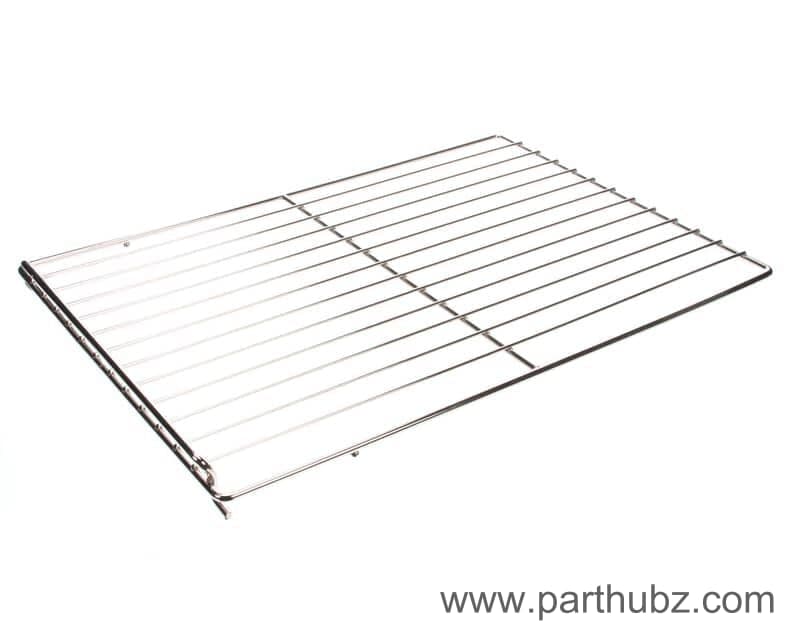
Blodgett 22637 Wire Rack with Stops, Oven 20 7/8 x 14 5/8
 In Stock 360°
Blodgett 912 Door Hinge Bushing
 In Stock 360°
Blodgett 90092 Steam Vent, Double, Stainless Steel, CTB
 In Stock 360°
Blodgett 19189 Control Panel and Decal Assembly, After 10/87, CTB/CTBR
 In Stock 360°
Blodgett 54477 Switch, Mode Selector, 4 Position
In StockBlodgett 15151 STAND, 24 S/S LEGS W/CASTERS
 In Stock 360°
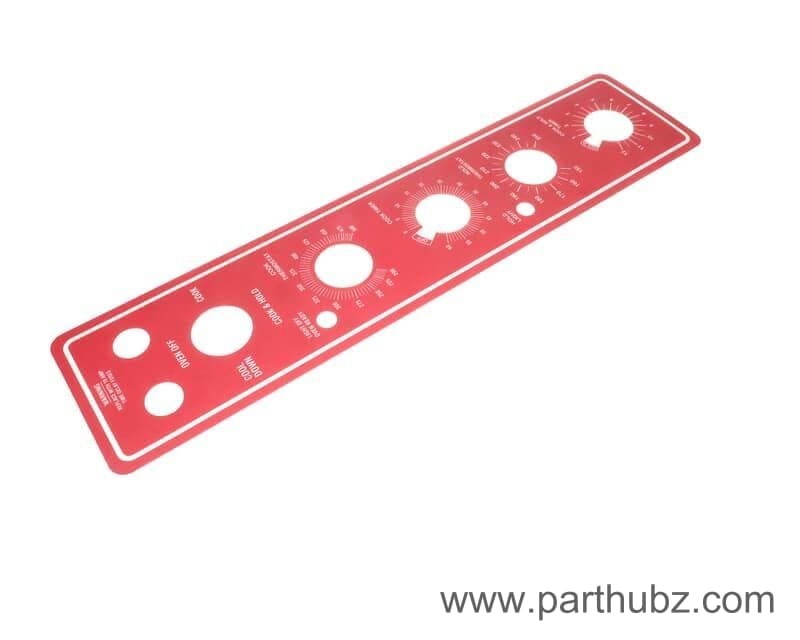
Blodgett 18907 Overlay, Control Panel, Cook & Hold, CTB/R
In StockBlodgett 54850 GASKET SET SCREWS,CTBR
In StockBlodgett 18482 STAND,16 S/S W/CASTERS
In StockBlodgett 11437 STAND, 19 S/S W/CASTERS
In Stock


