

 Image not available
 Hobart
HFC50
FryerHobart HFC50 Electric Fryer
The Hobart HFC50 is an electric fryer with a microprocessor thermostat and timer control. Its shortening capacity is 50 lb. (22 kg) for a full vat or 25 lb. (11 kg) per vat section.
- Voltage
- 208, 240, or 480 V220/380 V240/415 V
- Phase
- 3 phasealso listed as 3 phase, 4 wire
- Wattage
- 7,000 kW, 8,500 kW, or 10,500 kW per element2 elements
Hobart HFC50
29 compatible parts available
Genuine OEM Parts
Sourced from the manufacturer
Canadian Owned
Based in British Columbia
Canada-Wide Shipping
Every province and territory
24hr Quote Response
Answered by a real technician
Manuals & Documents
About the Hobart HFC50
Overview
The Hobart HFC50 is an electric fryer in the HFD/HFC series. Unlike the HFD models described in the manual, HFC fryers use a microprocessor, or computer, thermostat and timer control. The control manages cooking temperature and timed product cycles. The manual lists the HFC50 at a shortening capacity of 50 lb. (22 kg) for a full vat, or 25 lb. (11 kg) per vat section when configured as a split vat.
The HFC50 may be installed as a free-standing fryer or as part of a battery of fryers. The series manual describes batteries of up to five fryers, with configurations that can include an HFO Frymate Dump Station. That station is a separate related unit, not part of the HFC50 itself. Options described for the fryer series include filter-ready equipment, battery interplumbing, basket lifts with timers, and different basket arrangements.
Key Features
- Computer control: HFC models use a microprocessor thermostat and timer control.
- Timed cooking: The computer control can run programmed product cycles, display remaining cook time, and control the programmed cooking temperature.
- Product programming: The manual describes product names, cook times, cook temperatures, duty times and messages, and hold times for programmed products.
- Temperature modes: The control has heating and, when enabled, fat-melt modes. Melt mode is intended for solid shortening.
- Series options: Basket lifts with timers, filter-ready equipment, battery interplumbing, and basket arrangements are listed as options in the HFD/HFC series manual. Confirm the particular configuration of an HFC50 from its data plate or equipment records.
Specifications
- Product: Hobart HFC50 electric fryer.
- Control: Microprocessor (computer) thermostat and timer control.
- Shortening capacity: 50 lb. (22 kg) for a full vat; 25 lb. (11 kg) per vat section for a split vat.
- Electrical supply configurations listed for the series: 208/240 V, 3 phase; 220/380 V, 3 phase, 4 wire; 240/415 V, 3 phase, 4 wire; and 480 V, 3 phase.
- Electrical connection: The manual calls for a three-phase supply connected to terminals X, Y, and Z. Use the fryer data plate for the electrical rating of the specific unit.
- Installation clearance: 0 in. from back or side walls; 16 in. (40.6 cm) from an open-top flame burner.
- Battery configuration: The series manual describes batteries of up to five fryers.
Installation & Requirements
Install the HFC50 in accordance with applicable state and local codes, the National Electrical Code, ANSI/NFPA No. 70, and NFPA Standard #96, as stated in the manual. The fryer may be installed with 0 in. clearance from the back or side walls. Keep 16 in. (40.6 cm) between the fryer and any open-top flame burner. Position it so service access is practical.
The fryer is electric. The manual lists several supply configurations for the HF series: 208/240 V, 3 phase; 220/380 V, 3 phase, 4 wire; 240/415 V, 3 phase, 4 wire; and 480 V, 3 phase. The supply must suit the rating on the individual fryer’s data plate. For the three-phase connection, the manual identifies terminals X, Y, and Z. It also states that a supply line capable of handling the required kilowatts at the fryer’s rated voltage is needed for each 15 1/2 in. and 21 in. section. Have electrical and grounding connections made to the applicable code requirements.
Level the fryer front-to-back and side-to-side by adjusting its legs. The manual requires the fryer to be restrained with adequate ties to prevent tipping and hot-liquid splashing. Do not use the door or its handle to lift or move the fryer. If optional casters are installed and the restraint must be disconnected, unplug the electrical supply first; reconnect the restraint before plugging the fryer back in and returning it to position.
Operation
Before first use
Clean the fryer and heating elements before cooking. The manual instructs operators to use a non-corrosive, grease-dissolving commercial cleaner on the surface parts and tank interior, following the cleaner manufacturer’s directions. Rinse thoroughly and drain through the drain valve. Once the fryer has cooled, wipe the tank and heating elements completely dry with a soft, clean cloth. Clean, rinse, and dry the fryer accessories as well. Do not dry-fire the elements.
Filling and melting shortening
Liquid shortening may be used in HFD/HFC series fryers. Solid shortening must be melted using the melt cycle; melting it without that cycle can damage the fry tank and scorch the shortening. Fill the vat with shortening before turning on the heating elements. The manual warns that operating the elements without liquid or melted shortening can damage the tank walls, and resulting warpage can cause leaks.
When fat-melt mode is enabled and oil temperature is below 135 °F (57 °C), the computer control enters MELT mode after power-up. The control can be programmed to disable melt mode when only liquid shortening is used. Once the shortening is melted, the fryer proceeds to heating mode. The manual describes a 350 °F (176 °C) heating set point; READY displays after the oil reaches 335 °F (168 °C). The selected product’s programmed temperature controls the oil during its cook cycle.
Cooking with the computer control
After power-up, the control runs a self-check routine and then enters fat-melt or heating mode. When READY is displayed, select a programmed product pad to start a product cycle. Pressing START/STOP begins the timed cycle for the left or right basket and displays the time remaining. The product name and an arrow indicating the basket side appear during the cycle. The manual also describes a manual product function for setting a batch time and temperature.
Product programming can include a name of up to 12 alphabetic characters, a cook time, cook temperature, duty time and message, and a hold time. The listed cook-time, duty-time, and hold-time fields range from 00:00 to 99:59. The listed product cook-temperature range is 320–375 °F (161–190 °C). A duty message can prompt an action during a cook cycle, while the hold-time function signals when a product’s programmed holding time has elapsed.
The manual describes an idle setback option. When enabled, the idle temperature is 275 °F (135 °C), and the fryer automatically enters idle after 30 minutes. When disabled, the idle temperature is 350 °F (176 °C), and the fryer does not automatically enter idle after 30 minutes. Temperature calibration is performed when the temperature is stable at 350 °F (176 °C), using a thermometer to compare the vat temperature with the displayed value.
Filtering
Filter the shortening while it is liquified; cold shortening under the cold-zone area may remain solid and prevent proper draining. The manual recommends filtering at least once a day or more often if conditions warrant. Turn the power switch off before draining or filling. For a fryer without the filter-ready option, the manual describes draining through a filter bag or other filtering material into a container, flushing scraps and sediment with a small amount of warm shortening, closing the drain valve, and returning strained shortening to the tank. Refill to the fill-level line. For a filter-ready fryer, follow the separate mobile-filter operating manual supplied with that equipment.
Cleaning & Maintenance
Daily cleaning
Keep the exterior clean and free of accumulated grease. Wash exterior surfaces at least once daily using a cloth, warm water, and mild soap or detergent. Rinse with clear water and dry. For stainless-steel surfaces, the manual says to rub with the grain in a horizontal direction; a self-soaping scouring pad may be used for stubborn discolorations. Do not use a scouring pad or harsh cleaner on the computer keypad, especially the display area.
Weekly or as-required tank cleaning
After draining the shortening, flush scraps and sediment with a small amount of warm shortening and allow the tank to drain thoroughly. Close the drain valve and fill the tank with a non-corrosive, grease-dissolving commercial cleaner, following its manufacturer’s instructions. Set the thermostat to a temperature recommended for that cleaner and boil the solution for 15 to 20 minutes. For a water-based chemical, the manual gives a temperature range of 190–212 °F (87–100 °C); use the lowest possible setting and monitor the solution to prevent overflow.
Drain the cleaning solution, close the drain valve, and refill the tank with water. Add 1 cup (226 g) of vinegar to neutralize alkaline cleaner residue, bring the solution to a boil, and let it stand for a few minutes. Drain and rinse thoroughly. The supplied manual excerpt ends at this point, so it does not provide further steps for this procedure.
Troubleshooting
At power-up, the HFC computer control performs a self-check. The manual directs the operator to its Error Messages section if an error appears, but the supplied excerpt does not include the individual error codes or corrective procedures. Do not interpret the HFD-series indicator descriptions as HFC50 diagnostics: the manual identifies those controls as HFD-series features.
If the fryer is not heating as expected, the HFC control’s displayed mode matters: the fryer may be in MELT mode when fat-melt is enabled and the oil is below 135 °F (57 °C), or in heating mode while approaching the selected temperature. Before operating, confirm the tank contains liquid or melted shortening. The manual warns against dry-firing the elements. For a specific fault or electrical issue, consult the complete manual and have service personnel check the unit.
Applications
The HFC50’s 50 lb. full-vat capacity and timed computer-controlled cooking cycles suit commercial kitchens preparing batches of fried menu items. Programmable cook times and temperatures can support repeatable product routines, while the manual’s duty-message feature can remind operators to take an action during a cycle. Its ability to be installed alone or in a fryer battery gives kitchens options for arranging a cooking line; the actual electrical rating and installed options should be confirmed on the individual unit.
Hobart HFC50 Specifications
- Voltage
- 208, 240, or 480 V; 220/380 V; 240/415 V
- Phase
- 3 phase; also listed as 3 phase, 4 wire
- Wattage
- 7,000 kW, 8,500 kW, or 10,500 kW per element; 2 elements
- Model
- HFC50
- Basket Lift
- Optional
- Filter Ready
- Optional; use HMF50 mobile filter
- Fryer Series
- HFD/HFC Series
- Standard Legs
- Stainless steel
- Optional Finish
- Stainless steel sides
- Thermostat Type
- Microprocessor (computer) thermostat and timer control
- Heating Elements
- 2
- Optional Casters
- Available
- Vat Configuration
- Full vat or split vat; split vat capacity is 25 lb. each vat section (11 kg)
- Shortening Capacity
- 50 lb. (22 kg)
- Battery Configuration
- Can be arranged in batteries of 2 to 5 fryers
- Battery Interplumbing
- Optional
- Heating Element Ratings
- 7,000 kW, 8,500 kW, or 10,500 kW per element
- Product Weight Capacity
- 2.5 lb. (1.1 kg) per basket; 5.0 lb. (2.2 kg) total for 2 baskets
- Temperature Control Range
- 320–375 °F (161–190 °C)
- Available Electrical Supplies
- 208, 240, or 480 V, 3 phase; 220/380 V, 3 phase, 4 wire; 240/415 V, 3 phase, 4 wire
- Clearance From Back or Side Walls
- 0 in.
- Clearance From Open-Top Flame Burner
- 16 in. (40.6 cm)
Frequently Asked Questions
How much shortening does the Hobart HFC50 hold?+
Is the Hobart HFC50 electric or gas?+
What type of control does the HFC50 use?+
What electrical supply does the HFC50 require?+
Can the HFC50 use solid shortening?+
How does the HFC50 start a programmed cooking cycle?+
Does the HFC50 have a filter?+
How often should the HFC50 shortening be filtered?+
How much clearance does the manual specify?+
How long does a Hobart HFC50 last?+
Need Parts for This Model?
Get a free quote for parts, service, or maintenance for the Hobart HFC50. We respond within 24 hours.
 Hobart
View all Hobart equipment →
Parts for the Hobart HFC50
Browse genuine OEM components, gaskets, heating elements, thermostats, and replacement hardware guaranteed to fit this equipment.
 In Stock 360°
Hobart SC-047-32 Set Screw, Hex Socket Drive, Cupped Tip, 5/16-18 x 5/16"
 Available to Order
Hobart 00-426636-00001 PIPE,OIL RETURN - 11.500
 In Stock 360°
Hobart SC-112-90 Screw, Phillips Pan Head, 4-40 x 1"
 In Stock 360°
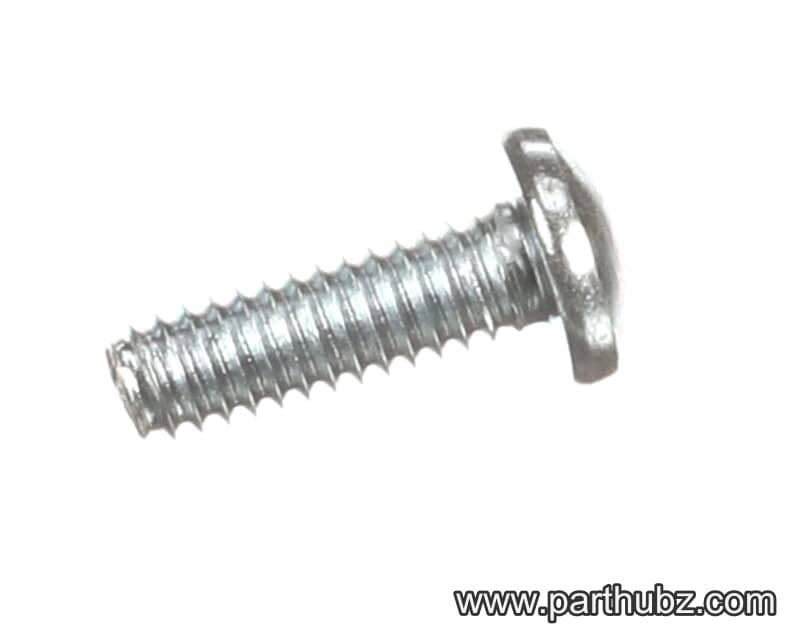
Hobart SD-015-41 Screw, Phillips, Pan Head, 8-32 x 1/2", Self-Tapping
 Available to Order
Hobart 00-421911-000G1 HANGER,BASKET SINGLE ASSEMBLY.
 In Stock 360°
Hobart RP-006-21 Roll Pin
Available to OrderHobart 00-422495-000G1 ARM,LIFT ASSEMBLY.
Available to OrderHobart 00-428448-00001 COVER, ACCESS
Available to OrderHobart 00-418118-00001 BOLT,ADJUSTING
Available to OrderHobart 00-426595-00001 GUSSET,DRAWER DOOR
 Available to Order
Hobart 00-414177-00001 ELEMENT CLAMP BOTT
Available to OrderHobart 00-418346-00002 CORD,POWER P
 In Stock 360°
Hobart 00-422322-000G1 Head Assemly, Element
Available to OrderHobart 00-418583-00004 RODREFILL
Available to OrderHobart 00-427740-00001 PLATE,CONTROL MOUNTING
Available to OrderHobart 00-418479-000G2 TUBE,WELDMENT ASSEMBLY
 Available to Order
Hobart 00-414178-000G2 Clamp, Top Element Assembly, HFD50/50F and HFC50/50F
 In Stock 360°
Hobart PB-002-26 Plug, Button
 Available to Order
Hobart 00-427435-00001 BRACKET, PULL ROD QUICK DISC.
 Available to Order
Hobart 00-417014-00001 BRACKET,REAR SUPPO
 Available to Order
Hobart 00-416741-000G7 ELEMENT,ASSEMBLY 240/7000KW
 Available to Order
Hobart 00-428077-000G1 FRAME, OIL TRAY 35/45
 Available to Order
Hobart 00-421844-000G1 TANK,ASSEMBLY SST
 In Stock 360°
