

 Hobart
P660
MixerHobart P660 Commercial Mixer
The Hobart P660 is a heavy-duty 60-quart mixer for dough, batter and pastry, with a 2½ HP motor, a #12 attachment hub and a standard bowl guard. Bowl sizes, timer controls and speed configurations vary by model.
- Voltage
- 208–240V (3 phase)208V or 240V (single phase)
- Phase
- 1 or 3 phase, depending on configuration
- Amps
- 8.5 A (retailer listing)8.6 A (manual, 3 phase)
Hobart P660
296 compatible parts available
Genuine OEM Parts
Sourced from the manufacturer
Canadian Owned
Based in British Columbia
Canada-Wide Shipping
Every province and territory
24hr Quote Response
Answered by a real technician
Manuals & Documents
About the Hobart P660
Overview
The Hobart P660 is a heavy-duty 60-quart mixer intended primarily for preparing dough, batter and pastry. The Hobart operation manual describes a 2½ horsepower motor, a #12 attachment hub and an electro-mechanical timer as standard equipment. A programmable timer controller is optional. A bowl guard is standard on P660 models; the manual notes that the mixer will not operate unless the guard is in position.
The P660 is also referred to as the Pizza 660. Product information describes it as having strengthened components for the heavy loads associated with pizza production. The manual identifies 30-, 40- and 60-quart bowls as available, along with bowl adapters, special agitators and other accessories. Confirm the machine’s actual configuration before selecting a bowl, agitator, attachment or replacement part.
Key Features
- 60-quart capacity: The model is described as a 60-quart mixer, with 30-, 40- and 60-quart bowls available.
- Heavy-duty mixing: Intended primarily for dough, batter and pastry; product information identifies strengthened components for heavy pizza-dough loads.
- Motor: 2½ horsepower.
- Attachment hub: #12 hub for compatible attachments. The manual cautions that the attachment hub should not be used while mixing.
- Timer options: Electro-mechanical timer is standard according to the manual; a programmable timer controller is optional.
- Guard: Bowl guard is standard. The mixer’s interlock requires the guard in its operating position.
- Configuration options: Source listings and the manual describe different electrical, speed and control configurations. Verify the machine’s data plate and installed components.
Specifications
- Manufacturer and model: Hobart P660.
- Equipment type: Heavy-duty commercial mixer.
- Capacity: 60 qt; the manual also identifies 30- and 40-quart bowls as available.
- Motor: 2½ HP.
- Attachment hub: #12.
- Timer: Electro-mechanical timer standard; programmable timer controller optional, as stated in the manual.
- Electrical options in the manual: 208 V, 60 Hz, single phase: rated 20 A; 240 V, 60 Hz, single phase: rated 17 A; 208–240 V, 60 Hz, three phase: rated 8.6 A.
- Electrical data in a product listing: 200–230 V, 60 Hz, three phase, 8.5 A. Check the data plate on the specific mixer because the source lists multiple electrical configurations.
- Speeds: The manual discusses single-speed and two-speed gearing; product listings also identify four-speed versions. Confirm the installed transmission before use.
- Speed information in the manual: Speed 1 is for incorporating ingredients, preparing pastry and finishing heavier batters and doughs. Speed 2 is described as medium-low and used to finish most dough and batter recipes. On single-speed models, the manual says all classes of work are performed at the intermediate speed.
- Listed dimensions for one P660 listing: 36 in wide × 60 in high × 36 in deep. Dimensions can depend on the specific listing or configuration.
- Listed weight for one P660 listing: 800 lb. This is the weight stated for a specific listed unit, not a confirmed weight for every P660 configuration.
- Other identifying information: The operation manual covers P660 mixers identified as ML-104386 and ML-104388. The parts manual covers ML-104386, ML-104388, ML-134152, ML-134154, ML-134198 and ML-134200.
Installation & Requirements
Before installation, check that the electrical service agrees with the specifications on the mixer’s data plate. The manual provides the electrical options listed above and instructs that electrical and grounding connections comply with applicable electrical codes. It directs installers to make connections according to the wiring diagram inside the top cover. For three-phase machines, check planetary rotation: with the gear shift on 1, briefly run the mixer and confirm rotation follows the arrow on the drip cup. If rotation is wrong, disconnect power and interchange two incoming power leads.
Position the mixer where there is adequate room to operate its controls and install or remove bowls. The space above the mixer must allow removal of the top cover for routine maintenance and service. Holes in the base allow the mixer to be bolted to the floor, although the manual says this is not necessary in normal installations. Level the mixer front-to-back and side-to-side using shims under the legs as required. Check the transmission and planetary oil levels before starting the mixer.
Operation
Before operating, become familiar with the controls and verify that the bowl, agitator and guard are correctly installed. The bowl must be in place before installing an agitator. With the bowl support fully lowered, position the bowl so its rear alignment bracket is under the bowl-support retainer and the front alignment pins fit into the bowl holes. Turn the bowl clamps over the bowl ears to secure it. To fit an agitator, place it in the bowl, push it onto the agitator shaft and turn it clockwise until the shaft pin seats in the slot in the agitator shank.
Close and centre the wire cage before starting. The manual states that the mixer will not operate unless the bowl guard is in position. If the bowl support is not fully raised, the mixer will not operate unless the START button is held in. Use the START and STOP buttons to control mixing. With an electro-mechanical timer, the timer works with START for timed mixing and stops the mixer when the preset time elapses. On models with a programmable timer controller, use the controller’s keys and knob as described in the manual.
Select a speed appropriate to the work and the installed gearing. The manual assigns Speed 1 to incorporating ingredients, preparing pastry and finishing heavier batters and doughs. Speed 2 is for finishing most dough and batter recipes. Single-speed machines perform all classes of work at the intermediate speed. For attachment operation, install the attachment in the hub with its square shank engaged in the square driver, then tighten the hub thumb screw. The manual says the meat and food chopper should be operated in first speed on two-speed P660 mixers; it is not recommended for single-speed P660 mixers. Stop the machine at once if material in the chopper stalls it, and do not attempt to restart it at a lower speed.
Cleaning & Maintenance
Disconnect electrical power and place a tag at the disconnect switch before cleaning or maintenance. The manual calls for thorough daily cleaning. Do not hose the mixer; wash it with a clean, damp cloth. A flat scraper and brush are supplied to help clean bowls and agitators. The apron can be removed by loosening its thumb screws, and the access cover behind it can be removed for cleaning. Periodically remove the drip-cup splash guard, which is secured by three screws, and wipe it clean. Follow the manual’s separate bowl-guard cleaning instructions for the wire cage and splash guard.
Before first use, wash new bowls and agitators with hot water and a mild soap solution. Rinse with a mild soda or vinegar solution, then rinse thoroughly with clear water. The manual also calls for this procedure before using bowls and agitators to whip egg whites or whole eggs.
Check the planetary oil periodically with power disconnected. The manual says the oil should be level with the bottom of the fill-plug hole. If draining is necessary, it specifies adding 6 fluid ounces of the recommended planetary lubricant. The planetary seal may become dry and squeak; the manual says to work a little lubrication under the seal lip. Check transmission oil with the motor stopped; it should be level with the line on the oil-level gauge. Add only a small amount of the recommended transmission oil if needed, and do not overfill. Contact a local Hobart Service Office for recommended lubricants.
Lubricate the bowl-lift slideways and lift screw approximately twice a year, as directed in the manual. Lower the bowl support fully and remove the apron to reach these areas; apply a thin coat of Lubriplate 630AA to the bowl-clamp area of the supports, each slideway and the lift screw. For a manual bowl lift, periodically lubricate the handwheel gearing with power disconnected and the top cover removed.
Check agitator clearance each time the bowl is changed. The agitator must not touch the bowl. The manual gives a maximum clearance of 1/8 in between the bowl bottom and the B flat beater, and 5/16 in between the bowl bottom and the E or ED dough arm. The manual describes measuring clearance with flour in the bowl and adjusting the stop screw if needed. If repeated bowl-clamp adjustments are necessary, it says that additional service is indicated.
Troubleshooting
- Mixer will not start: Check whether the gear shift lever is between gears rather than fully engaged; whether the circuit protector is open, including a fuse or disconnect switch issue; whether the mixer or attachment is overloaded; whether the bowl is fully raised; and whether the wire cage assembly is in the front-centre position.
- Agitator touches the bowl: Check that bowl clamps are closed, that agitator clearance is correct and that the bowl clamps are adjusted properly. Refer to the manual’s clearance and clamp adjustment procedures.
- Planetary seal squeaks: The manual identifies a dry seal as a possible cause. Work a little lubrication under the seal lip.
- Service: The manual directs users to contact a local Hobart Service Office if service is needed.
Applications
The P660 is suited to commercial kitchens, pizzerias and bakeries preparing dough, batter and pastry. Its manual also describes work such as incorporating ingredients, preparing pastry and finishing heavier doughs and batters. Compatible attachments can expand its food-preparation uses, subject to the attachment’s instructions and the mixer’s installed gearing.
Hobart P660 Specifications
- Width
- 36"
- Height
- 60"
- Weight
- 800 lbs
- Voltage
- 208–240V (3 phase); 208V or 240V (single phase)
- Phase
- 1 or 3 phase, depending on configuration
- Amps
- 8.5 A (retailer listing); 8.6 A (manual, 3 phase)
- Brand
- Hobart
- Model
- P660
- Timer
- Electro-mechanical timer standard; programmable timer controller optional
- Capacity
- 60 qt
- Warranty
- 90-day limited warranty
- Wire Size
- 60 °C copper wire: 208 V / 1 phase—10 AWG for fuse circuit, 12 AWG for circuit breaker; 240 V / 1 phase—10 AWG; 208–240 V / 3 phase—14 AWG for fuse circuit, 12 AWG for circuit breaker
- Bowl Guard
- Standard
- Dimensions
- 36 in wide × 60 in high × 36 in deep
- Rated Amps
- 20.0 A at 208 V / 1 phase; 17.0 A at 240 V / 1 phase; 8.6 A at 208–240 V / 3 phase; retailer listing states 8.5 A
- Motor Power
- 2 1/2 horsepower
- Motor Speed
- 1725 RPM
- price range
- $10,995–$19,500
- Bowl Options
- 30, 40, or 60 qt
- Attachment Hub
- #12
- Shipping Weight
- 800 lb
- Maximum Fuse Size
- 30 A at 208 V / 1 phase; 25 A at 240 V / 1 phase; 15 A at 208–240 V / 3 phase
- Circuit Breaker Size
- 30 A at 208 V / 1 phase; 30 A at 240 V / 1 phase; 20 A at 208–240 V / 3 phase
- Minimum Circuit Size
- 30 A at 208 V / 1 phase; 25 A at 240 V / 1 phase; 15 A at 208–240 V / 3 phase
- Electrical Specifications
- Manual configurations: 208 V / 60 Hz / 1 phase; 240 V / 60 Hz / 1 phase; 208–240 V / 60 Hz / 3 phase. Retail listing also states 200–230 V / 60 Hz / 3 phase.
Frequently Asked Questions
What is the difference between the Hobart P660 and H600?+
How much does a Hobart P660 weigh?+
How can I tell how old a Hobart P660 mixer is?+
How long do Hobart P660 mixers last?+
How much does a 60-quart Hobart mixer bowl cost?+
How much does a Hobart P660 mixer cost?+
What electrical service does the P660 require?+
What bowl sizes can be used with the P660?+
Why will a P660 mixer not start?+
Need Parts for This Model?
Get a free quote for parts, service, or maintenance for the Hobart P660. We respond within 24 hours.
 Hobart
View all Hobart equipment →
Parts for the Hobart P660
Browse genuine OEM components, gaskets, heating elements, thermostats, and replacement hardware guaranteed to fit this equipment.
 Available to Order
Hobart 00-437525 WORM,DRIVE
 In Stock 360°
Hobart SD-008-25 Screw, Phillips Pan Head, 10-16 x 1/2"
 In Stock 360°
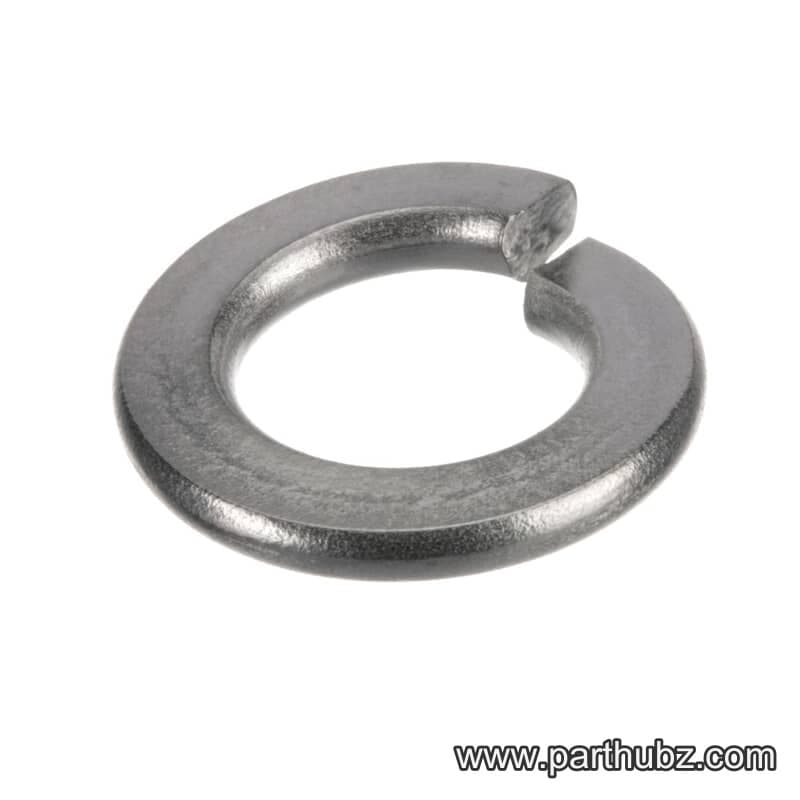
Hobart WL-006-27 Lock Washer, Split, 3/8", Stainless Steel
 In Stock 360°
Hobart WL-012-05 Lock Washer, External Tooth, W 04
 Available to Order
Hobart RP-002-42 ROLL PIN
 In Stock
Hobart 00-065790-00001 Bowl Adaptor, 60-40 Quart & 60-30 Quart
 In Stock 360°
Hobart 00-061498 Shock Absorber
 Available to Order
Hobart 00-274697-00002 BRACKET, BEARING
 In Stock 360°
Hobart 00-087711-071-1 Microswitch, Interlock, Shifting Unit
 In Stock 360°
Hobart RP-002-03 Roll Pin, 3/16" x 1 1/4" Long
 In Stock 360°
Hobart 00-875179 Spacer, Clutch Shaft
 Available to Order
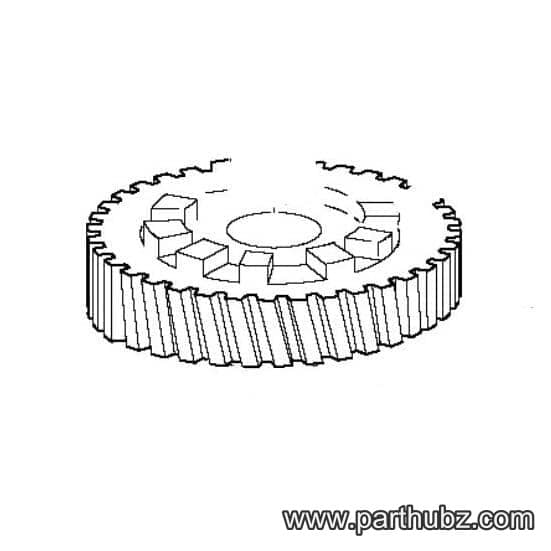
Hobart 00-437509 GEAR,LOWER-CLUTCH
 In Stock 360°
Hobart SC-018-20 MACHINE SCREW
 Available to Order 360°
Hobart BB-009-37 Ball Bearing, Upper, Shaft-Worm Gear
 In Stock
Hobart RR-005-02 Retaining Ring, Spirolox, Bowl Lift
 In Stock 360°
Hobart BB-013-03 Ball Bearing, #12 Hub
 Available to Order
Hobart 00-060486 Shield, Planetary Oil
 In Stock 360°
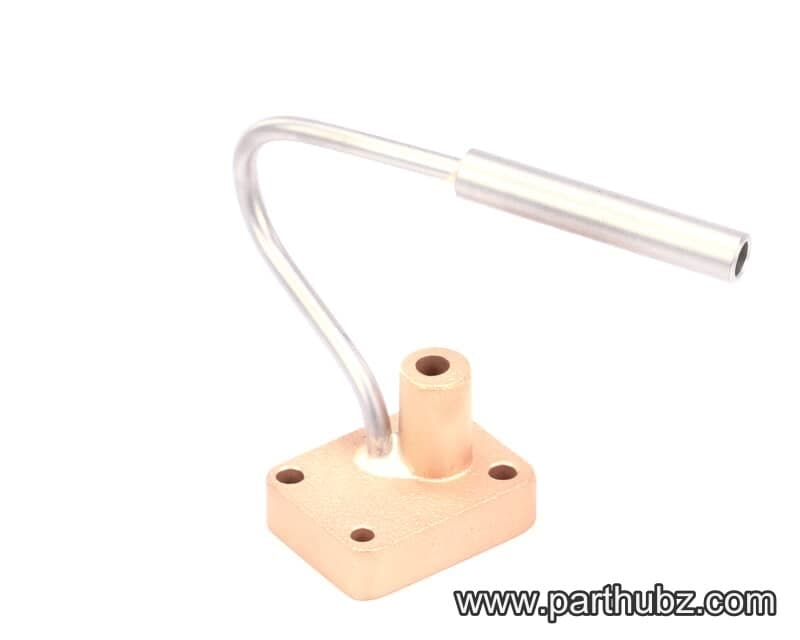
Hobart 00-123679 Housing & Tube Assembly
 In Stock 360°
Hobart PG-007-19 Grooved Pin, 1/4 x 2 3/4"
 In Stock 360°
Hobart 00-012430-00058 Key, P660
 In Stock 360°
Hobart 00-087711-183-4 Switch, Pushbutton
Available to OrderHobart 00-874988-00001 HOUSING,REED SWITCH H600 PTD
Available to OrderHobart 00-294879-00002 BRACKET-BEARING
 In Stock
