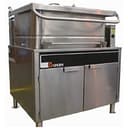
 Groen
DHS-40
Low Height Steam Jacketed KettleGroen DHS-40 Gas Tilting Kettle
The Groen DHS-40 is a low-height, gas-fired tilting steam-jacketed kettle with a 40-gallon capacity. Its manual lists a 14-gallon jacket, a 150,000 BTU firing rate and an 82,000 BTU-per-hour energy rate into the product.
- Voltage
- 115 vac
- Phase
- single phase
- Amps
- 5 AMP
- Total BTU
- 150,000 BTU
Groen DHS-40
52 compatible parts available
Genuine OEM Parts
Sourced from the manufacturer
Canadian Owned
Based in British Columbia
Canada-Wide Shipping
Every province and territory
24hr Quote Response
Answered by a real technician
Manuals & Documents
About the Groen DHS-40
Overview
The Groen DHS-40 is a low-height, gas-fired tilting steam-jacketed kettle for commercial kitchens that prepare food in large batches. Its 40-gallon capacity suits production of soups, sauces, stocks and similar menu items in commissaries, catering operations and institutional foodservice kitchens. The kettle’s jacket holds water that is heated during operation; the manual identifies a 14-gallon jacket capacity. The manual’s performance data lists a 150,000 BTU-per-hour firing rate and 82,000 BTU per hour of energy into the product.
Specifications and instructions in the available manual cover DHS-40 family configurations. Features that the manual identifies as specific to another configuration, such as a tangent draw-off on DHS/T models or a core probe on C2T models, are not presented here as standard DHS-40 equipment.
Key Features
- Large-batch capacity: The kettle holds 40 gallons.
- Steam-jacket heating: The jacket capacity is 14 gallons, according to the manual’s performance data.
- Tilting kettle body: The DHS-40 is identified as a tilting kettle. The manual notes that the body must not be tilted when checking certain burner-start issues and warns against putting unnecessary weight or pressure on the kettle front or pouring lip.
- Gas-fired heat: The listed firing rate is 150,000 BTU per hour.
- Energy into product: The manual lists 82,000 BTU per hour.
- Controls and ignition components: Troubleshooting instructions refer to a temperature controller, burners, pilot assembly, ignition control module and tilt limit switch.
Specifications
- Model: Groen DHS-40.
- Product type: Low-height steam-jacketed tilting kettle.
- Heat source: Gas.
- Kettle capacity: 40 gallons (150 litres).
- Tangent draw-off: No, according to the DHS-40 row in the manual. The manual lists a tangent draw-off for DHS/T-40, a related model.
- Jacket capacity: 14 gallons (53 litres).
- Kettle body diameter: 30 inches (762 mm).
- Base width: 47 inches (1194 mm).
- Base, front to back: 29 inches (736 mm).
- Firing rate: 150,000 BTU per hour.
- Energy into product: 82,000 BTU per hour.
- Standard electrical service: 115 VAC, 60 Hz, single phase, 5 AMP, as specified for standard units in the manual.
- Gas connection: 1/2-inch line or approved equivalent, as specified in the manual.
Installation & Requirements
The manual requires installation by personnel qualified to work with gas, electricity and plumbing, in accordance with applicable codes. Set the kettle on a combustible or noncombustible floor, level it using a spirit level on the bar rim and adjust the feet as needed. Leave space for cleaning, maintenance and service. The manual also requires an adequately ventilated room with sufficient air supply and a vent hood and exhaust fan. The vent duct must not connect directly to the kettle flue, and neither the flue nor vent duct should be obstructed after installation. Keep combustible materials away from the area directly around the appliance.
Clearances in the manual
- Left side: 6 inches from a combustible wall; 0 inches from a noncombustible wall; 6 inches recommended.
- Right side: 6 inches from a combustible wall; 0 inches from a noncombustible wall; 10 inches recommended.
- Rear: 10 inches from either combustible or noncombustible walls; 12 inches recommended.
Gas and electrical connections
Connect the gas service main using a 1/2-inch line or an approved equivalent. After connecting the gas supply, check all gas joints for leaks with a thick soap solution or another suitable leak detector; the manual explicitly says not to use a flame. The gas supply and installation must meet applicable local requirements. The manual references ANSI Z223.1/NFPA 54 or, where applicable in Canada, the Natural Gas and Propane Installation Code CSA 149.1.
For standard units, provide 115 VAC, 60 Hz, single-phase, 5 AMP electrical service. Bring electrical service through the entrance at the rear of the support housing using a 1/2-inch conduit connector and make a watertight connection. Ground the unit at the terminal provided. Follow applicable electrical requirements, including the Canadian Electrical Code, CSA C22.2, where applicable. The manual calls for qualified installation personnel and requires the unit to be installed in accordance with applicable codes.
Jacket and pressure-relief setup
Before use, confirm that the jacket water level is between the gauge-glass markers or inside the sight-glass port. If the level is low, follow the manual’s jacket-filling and water-treatment instructions. The open end of the elbow at the pressure relief valve must point downward. Do not connect piping to the pressure relief valve; it must be free to vent steam. The manual warns that improper installation can void the warranty.
Operation
The manual identifies the temperature controller, gas burners and tilt limit switch as part of the kettle’s operating system. Its troubleshooting instructions describe checking the controller’s relay response as the dial is moved above and below the kettle temperature; this check is for an authorized service representative. The manual also notes that the kettle body should not be tilted when investigating a burner that will not light, and that the tilt limit switch should be closed when the body is upright.
Follow the operator manual for the full operating sequence and safety instructions. Do not connect piping to the pressure relief valve, and keep clear of steam discharged from it. The manual warns that direct contact with vented steam can cause severe burns. It also cautions operators not to stand on or apply unnecessary weight or pressure to the front of the kettle or its pouring lip, as this can overload and damage the tilt mechanism and create a risk of injury or burns.
Cleaning & Maintenance
Cleaning procedure
The manual calls for cleaning food-contact surfaces as soon as possible after use. If the kettle is in continuous use, thoroughly clean and sanitize the interior and exterior at least once every 12 hours. Before cleaning, turn the kettle’s main power switch to OFF and shut off electrical power at a remote switch, such as the circuit breaker. Keep water and cleaning solutions out of controls and burners, and do not use a high-pressure hose on the kettle.
- Scrape and flush away food residue, taking care not to scratch the kettle with metal implements.
- Prepare a hot detergent or cleaning solution according to the supplier’s directions and clean the unit inside and out. A cloth moistened with cleaning solution may be used on controls, housings and electrical conduits.
- Rinse thoroughly with hot water and drain completely.
- For burnt-on food, the manual permits a brush, sponge, cloth, plastic or rubber scraper, or plastic wool with cleaning solution. Allowing the solution to soak can help loosen residue.
- Do not use abrasive materials, metal tools or steel wool. Scratches can make surfaces harder to clean and provide places for bacteria to grow; steel-wool particles can contribute to corrosion and pitting.
- The exterior may be cleaned with a warm-water spray at 100°F or less. Do not use a high-pressure spray.
- When sanitizing, the manual specifies a solution equivalent to one supplying 200 parts per million of available chlorine. It recommends sanitizing just before use and warns not to leave sanitizer on stainless steel surfaces for more than 10 minutes.
- If hard water or food residue leaves mineral deposits or a film, use a de-liming agent according to its manufacturer’s directions, then rinse and drain the unit thoroughly before further use.
The manual recommends keeping cleaning chemicals off skin, eyes, mucous membranes and clothing, and following product-label precautions. If cleaning problems persist, it advises contacting the cleaning-product representative.
Maintenance and service safety
The manual recommends checking pressure relief valve operation periodically and warns of burn risk from escaping steam. It states that the pressure gauge should show a vacuum of 20 to 30 inches when the kettle is cold. Keep grease away from electrical parts near the gears. Before replacing parts, disconnect electrical power, close the main gas valve and allow 5 minutes for gas to vent. The manual cautions that replacement parts should be supplied by Groen or its authorized distributors; other parts can cause injury or equipment damage and may void warranties.
Troubleshooting
The manual separates operator checks from work for an authorized service representative. Disconnect power before servicing; the manual warns that failure to do so could result in electrocution or death. Gas, electrical and internal component checks should be handled by qualified service personnel as indicated below.
- Burners will not light — operator checks: Confirm that the main gas supply valve is open (its handle is in line with the gas pipe), that the building has gas supply, and that the kettle body is not tilted.
- Burners will not light — service checks: The manual directs an authorized representative to check temperature-controller operation and confirm that the tilt limit switch is closed when the kettle body is not tilted.
- No spark — service checks: Check for 24 volts AC between the transformer secondary terminals. If the voltage is not 24 volts, the manual directs replacement of the transformer. Also check that the high-tension cable is attached and in good condition, the pilot ceramic is not cracked or broken, and the pilot spark gap is set correctly.
- Safety valve opens: The manual lists air in the jacket, the temperature-controller dial setting, a defective controller and a defective safety valve as possible causes. It says a defective controller’s relay should click as the dial is turned above and below kettle temperature. If the valve opens at pressures below 49 PSI, the manual directs replacement of the valve.
- Small amount of steam leaks from the safety valve during operation: The manual identifies contamination preventing the valve from seating as one possible cause and gives a brief lever-pull procedure to clear it. Avoid exposure to discharged steam and follow the operator manual’s safety precautions; the manual also directs replacement of a defective valve with an identical valve.
- Spark is present but the pilot will not light — service checks: Check the pilot-valve connections and for 24 VAC at terminals PV and PV/MV. If 24 volts is absent, the manual directs replacement of the ignition control module. It also lists gas pressure of at least 3.5 inches water column, an unobstructed pilot gas line, a clean orifice, the pilot-valve magnetic operator, pilot spark position and drafts as checks.
- Pilot lights, but the main burner does not come on and the spark stops: The manual directs service personnel to check for 24 volts between MV and PV/MV while the pilot is burning, gas pressure of at least 3.5 inches water column, and the main-valve electrical connections and magnetic operator.
- Pilot lights, but the main burner does not come on and the spark continues: The manual lists a poor burner ground, a cracked pilot-burner ceramic insulator, a grounded cable, incorrect gas pressure, a dirty pilot assembly, loose connections, a weak pilot flame and a failed ignition control module as possible checks.
- Main burner comes on but will not stay on: The manual directs service personnel to check the burner ground wire and connection and to check for low gas supply pressure.
- CPER on a C2T display: For C2T models only, first check that the core probe is plugged into its receptacle. Service personnel should check for loose or broken wires, a damaged or failed RTD probe, or a PCB board malfunction.
Applications
The DHS-40’s 40-gallon capacity is suited to batch cooking in commissaries, catering kitchens and institutional foodservice operations. Typical kitchen uses include preparing soups, sauces and stocks, as well as other menu items that benefit from cooking in a large kettle. Confirm the available space, gas service, electrical service and ventilation requirements against the manual before planning an installation.
Groen DHS-40 Specifications
- Width
- 47"
- Voltage
- 115 vac
- Phase
- single phase
- Amps
- 5 AMP
- Total BTU
- 150,000 BTU
- Model
- Groen DHS-40
- Base Width
- 47 in. (1194 mm)
- Jacket Capacity
- 14 Gal. (53 liter)
- Kettle Capacity
- 40 Gal. (150 liter)
- Tangent Draw-Off
- No
- Base Front to Back
- 29 in. (736 mm)
- Electrical Service
- 115 vac, 60 Hz, single phase, 5 AMP
- Gas Service Piping
- ½” line or approved equivalent
- Firing Rate Per Hour
- 150,000 BTU
- Kettle Body Diameter
- 30 in. (762 mm)
- Energy into Product Per Hour
- 82,000 BTU
- Recommended Clearance - Rear
- 12 in.
- Recommended Clearance - Left Side
- 6 in.
- Recommended Clearance - Right Side
- 10 in.
- Minimum Clearance from Combustible Walls - Rear
- 10 in.
- Minimum Clearance from Non-Combustible Walls - Rear
- 10 in.
- Minimum Clearance from Combustible Walls - Left Side
- 6 in.
- Minimum Clearance from Combustible Walls - Right Side
- 6 in.
- Minimum Clearance from Non-Combustible Walls - Left Side
- 0 in.
- Minimum Clearance from Non-Combustible Walls - Right Side
- 0 in.
Frequently Asked Questions
What is the capacity of the Groen DHS-40?+
How much water does the steam jacket hold?+
What are the DHS-40’s listed firing and product-energy rates?+
What are the kettle and base dimensions in the manual?+
Does the DHS-40 have a tangent draw-off?+
What gas and electrical connections does installation require?+
What clearances does the manual specify?+
What ventilation does the manual require?+
How often should the kettle be cleaned?+
What documentation is available for the DHS-40?+
Need Parts for This Model?
Get a free quote for parts, service, or maintenance for the Groen DHS-40. We respond within 24 hours.
 Groen
View all Groen equipment →
Parts for the Groen DHS-40
Browse genuine OEM components, gaskets, heating elements, thermostats, and replacement hardware guaranteed to fit this equipment.
 In Stock 360°
Groen Z008877 Close Nipple, 1/2" NPT
 In Stock 360°
Groen Z098458 Shutoff Valve, Gas, Manual, 1/2"
 In Stock 360°
Groen 178093 Transformer, 120/208/240 to 24 Volt, 50/60HZ, 96VA
 In Stock 360°
Groen Z005722 Full Coupling, 1/2" NPT, 150#
 In Stock 360°
Groen Z003122 Screw, Slotted, Round Head, 4-40 x 3/4"
 In Stock 360°
Groen 123815 Gas Valve, Basotrol, Natural Gas
 In Stock 360°
Groen 101143 Boot, Plastic, Model 3Z4A
 In Stock 360°
Groen 137487 Transformer, 120 to 24V, 20VA, 50/60HZ
 In Stock 360°
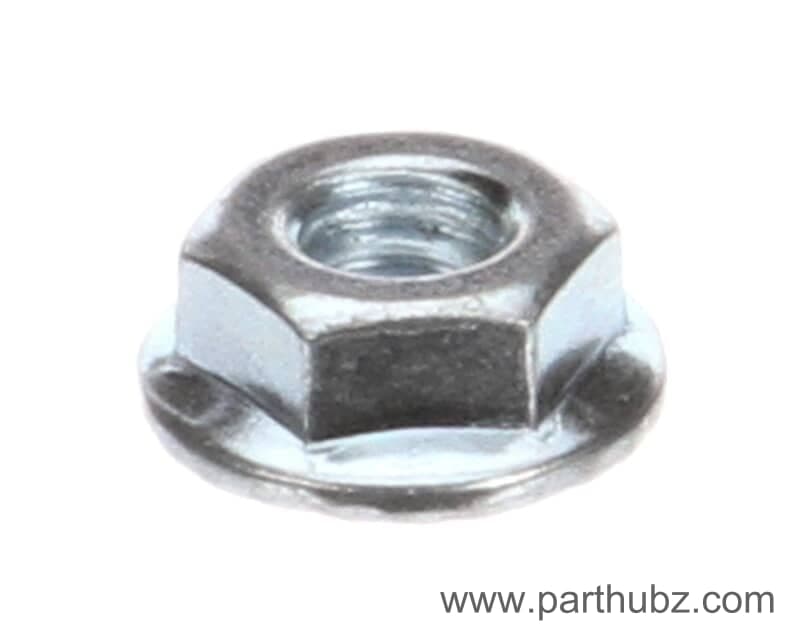
Groen NT1101 Nut, Hex, Serrated, 1/4-20
 In Stock 360°
Groen Z077854 Fuse Holder, Type 3 AG
 In Stock 360°
Groen 182092 Fuse, 2 Amp, 600VAC, Time Delay
 In Stock 360°
Groen Z084208 Pressure Gauge, 2-1/2" Diameter, Dual Scale
 In Stock 360°
Groen Z006796 Tubing, Pilot, 1/4" OD, Aluminum, Sold By Inch
 In Stock 360°
Groen 176921 Switch, Rocker, Recessed, DPDT, Power
 In Stock 360°
Groen Z009048 Stem for Draw Off Valve, 2", with O-Ring
 In Stock 360°
Groen Z005097 Cap Screw, Socket Head, 3/8-16
 In Stock 360°
Groen Z097005 Valve Safety, 50 PSI, 1/2"NPT
 In Stock 360°
Groen Z013617 Crank Handle, 3/4" Bore
 In Stock
Groen Z008772 Tee, 1/2" NPT, Black Iron
 In Stock 360°
Groen Z013609 Gear, 3 Bore, 92 Teeth
 In Stock 360°
Groen Z009047 Bonnet, 2" Valve
 In Stock 360°
Groen 116383 Light, Red, 24V
 In Stock 360°
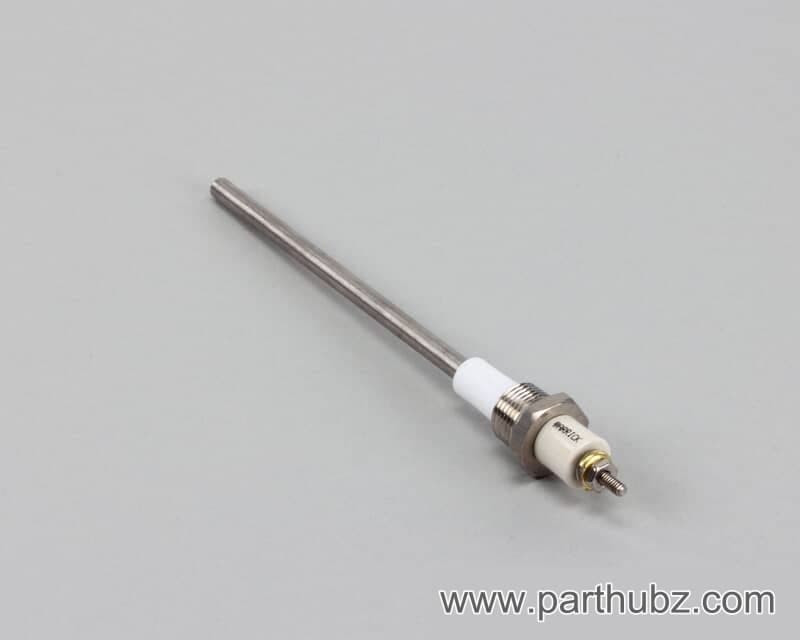
Groen Z002170 Electrode, Water Level
 In Stock 360°